
CommuniTrees

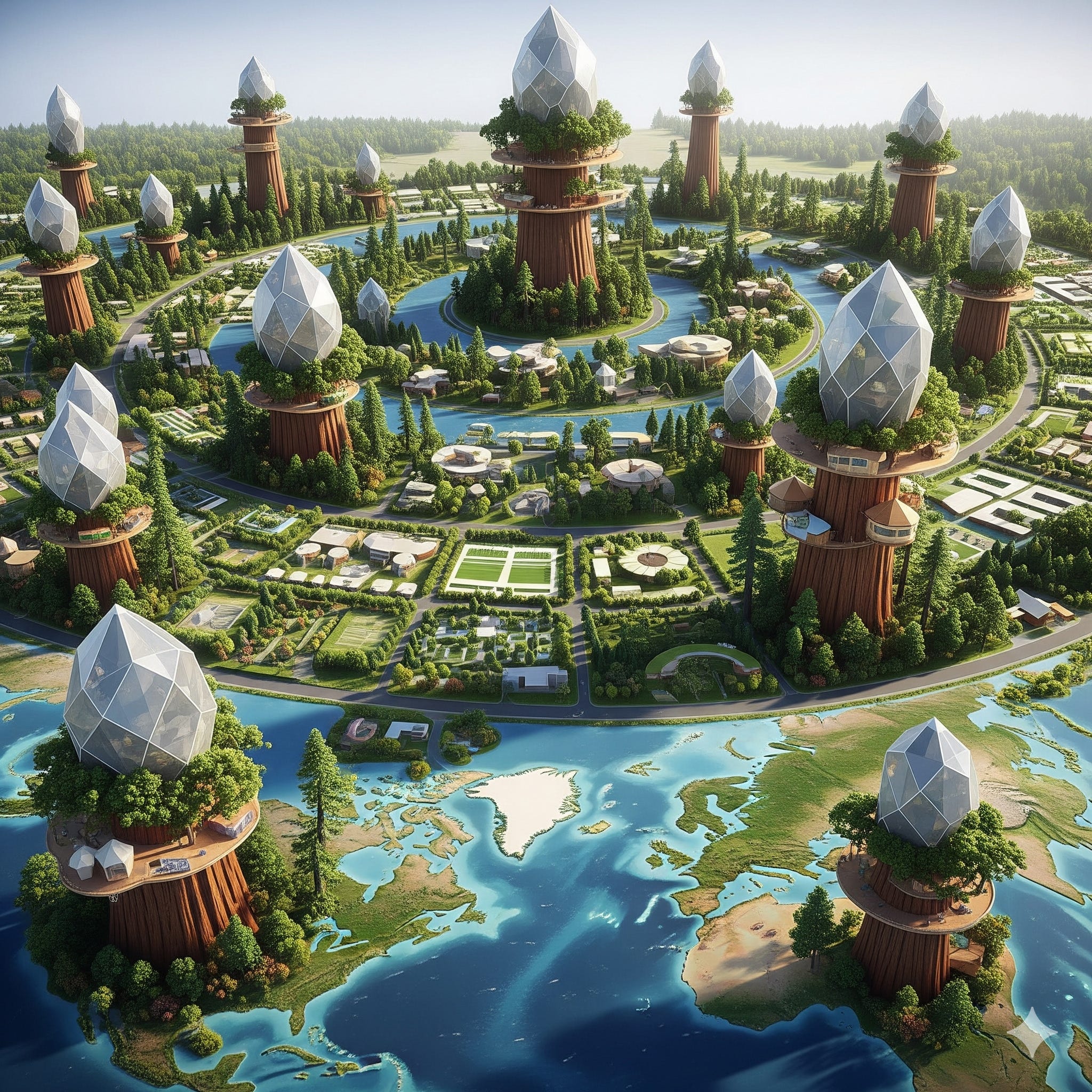
The Problem:
We are all living in unstable times. The structures we have depended on for generations for stability are beyond stress-tested. Many of them are starting to collapse. From the economy, to healthcare, education, government, soon to be (and in many places already is) infrastructure etc. The list goes on and on. We have consumed our planet to near death. That is the bad news. The good news is that these problems are human generated so they can be recreated and regenerated. The solutions are out there, the technology exists. More importantly, the NATURAL solutions exist. If we can funnel enough capital to them in enough time, we can maintain a livable climate.
I have seen communities living off grid, growing 90% of their own food, educating their children in nature as one with nature, caring for the elderly as the royalty they are! I have also seen communities burning coal, eating food filled with toxic chemicals and teaching little boys it is ok to play extremely violent video games. Both of these realities are true, but in America we are forced to believe it is the only way.
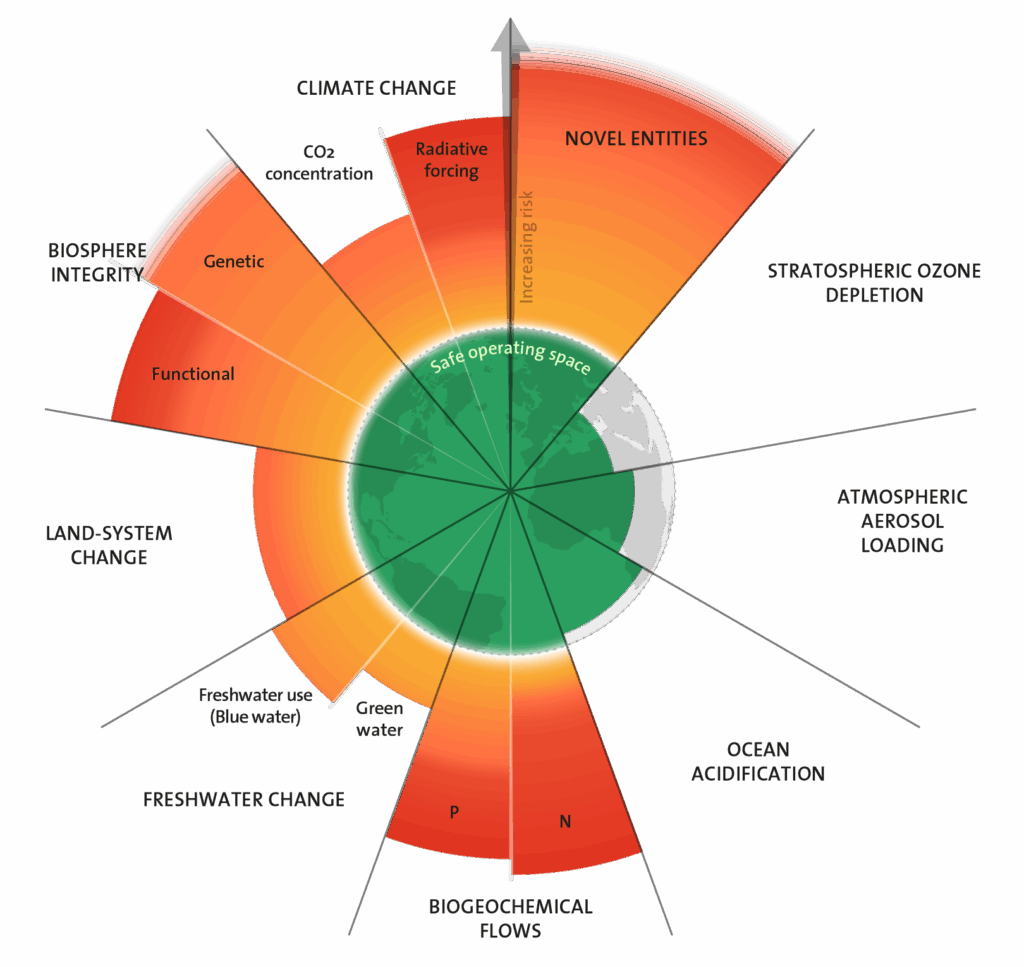
The take-make-use-waste culture where “mankind” has “dominion over nature” has catapulted the entire planet into collapse. According to the Stockholm Resilience Center, there are nine planetary boundaries for human life to be possible on planet earth. We surpassed six of them in 2023.
Within our lifetime, extreme heat will melt pavement and roads. The metal on high-speed light rails will bend. Ground water will dry up. Crops the majority of humans depend on for sustenance will die off. I could keep going but you get the picture. Our current infrastructure is built for a moderate climate, and it will not stand up to the extreme weather that will continue to intensify in the years ahead. This means we already have to redesign and rebuild our communities, cities, and transportation systems etc. so let’s do it right this time!
The Solution:
We must reimagine and recode virtually all the systems that shape and govern human society. Rather than a take-make-use-waste culture where humans see themselves as separate from nature, we must create communities centered on ecosystem services. Ecosystem services are the myriad benefits that humans receive from the natural world. These services are the direct and indirect contributions of healthy, functioning ecosystems to human well-being and are essential for our survival and quality of life. This is a regenerative approach that seeks to actively improve the health of ecosystems and human societies.
This sounds lovely in theory, but what does this actually look like in reality? My sons and I are on a multiyear, international, immersive research quest to find out. Through the Regenerative World Quest, we have visited 12 communities so far and have 10 more coming up in the U.S.A over the next seven months (we hope to visit 100 in the next five years). From this research we are cultivating a network, creating case studies, identifying best practices, creating a replication model and ultimately exploring what it means to implement the learnings. It is really an ancient way of living and through modern innovations and technology we can leverage the best of these worlds to create a blueprint for shared prosperity on a healthy planet.
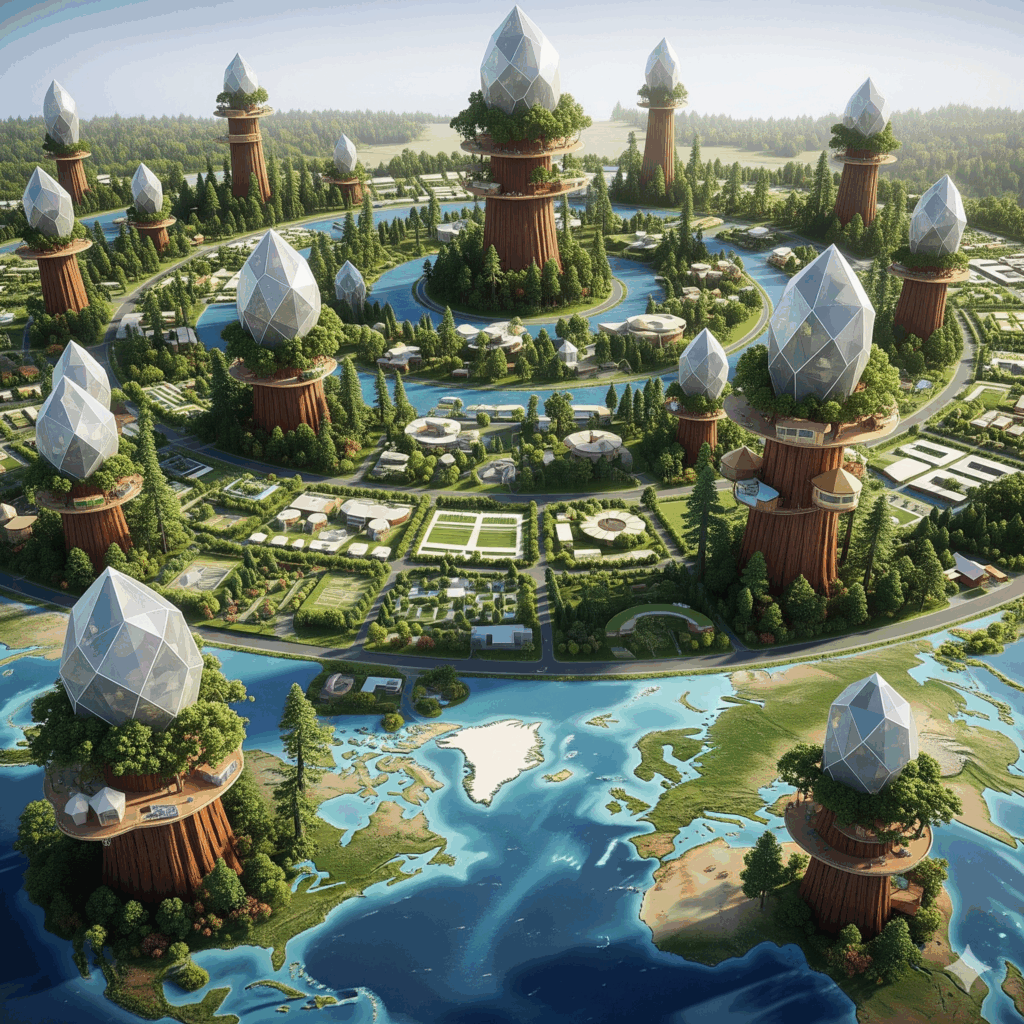
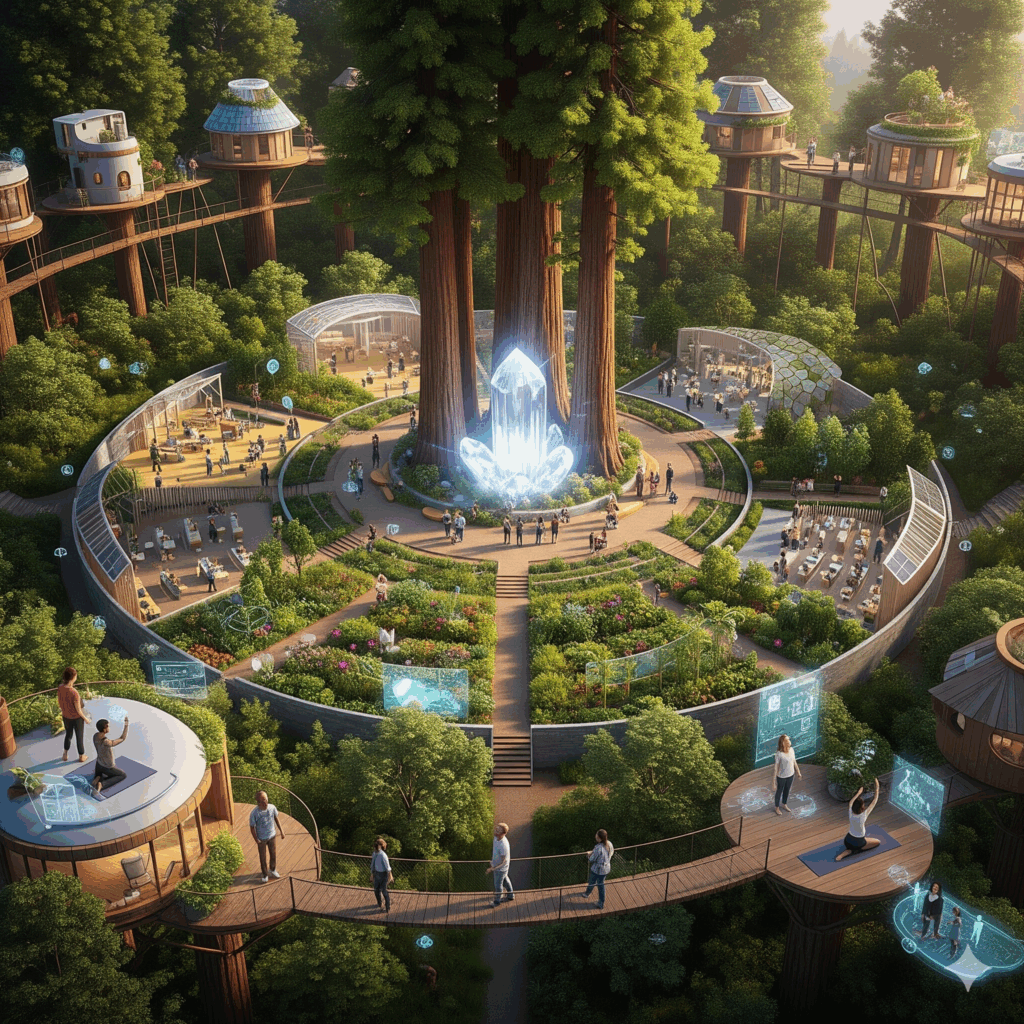
One concept I have loved “visioning into” is…drum roll please….Communitrees. Communities centered around trees. Where the people care for the trees and the trees care for the people. The trees are just the start, we can apply this concept to water, animals, plants, soil- virtually all aspects of nature humans interact with. For this blog, trees will be the example, but it does not stop there.
We are just now beginning to remember the potency of trees. Yes, folks generally understand that trees help control erosion, provide shade, and grow food, but the real medicine is in the aerosols they produce. There is something like 200-275 different aerosols trees emit and they combine in the air to create different ‘tree-tinctures’.
To name a few:
Isoprene protects the tree from solar radiation acting like a sunscreen, hovering above a forest like an invisible sunshield.
Terpenes are natural pesticides and double cloud concentration which helps to regulate climate.
Juglone repels insects.
Trees release pheromones when in danger (i.e. an insect infestation) that warns other trees and signals them to produce the specific aerosol to repel the insect.
Imagine the benefits to humans living in healthy, thriving forest ecosystems where the isoprene acts as a sun barrier for us too, where the terpenes keep the bugs away naturally and bring more clouds and moisture to the lands.
That is just the beginning…
Willows are medicinal and can help with fevers, body aches, and headaches.
Willow and Poplars can clean up toxic waste.
American Urban forests alone remove other air pollutants that would cost humans $4 billion to clean up otherwise.
Trees attract rain and moisture to them, the more trees the more moisture they attract.
Strategically planted trees can reduce building heating and cooling costs by 8%-12%.
A million strategically planted trees can reduce energy costs by $10 million.
Trees increase property value by 1% per mature tree.
(Facts above sourced from the Archangel Ancient Tree Archive, more specifically from the book: The Man Who Planted Threes by Jim Robbins).
Pretty cool huh? and…all of this is based on the trees of today, the average trees we see around us, not the old growth forests that used to cover 40-60% of land. Humans have clear cut 98% of the old growth forests. As colonization spread, humans clear-cut the biggest and best to build the infrastructure of today. The trees that are left are the genetic runts. A mature redwood or sequoia sequesters x10 the amount of carbon an average tree does, and they do so for up to 3000 years. An incredible group called the Archangel Ancient Tree Archive is working to reforest the planet with old growth trees. They have an amazing program for urban regeneration planting old growth trees with inner city youth and training the kids to care and protect the trees. Their first installation is in Treetriot Michigan, a previously dilapidated part of the city following the 2008 bubble. We are going to visit them in October so stay tuned for more on them soon!
So where am I going with this? Since the first agricultural revolution about 10,000 years ago, we have been building communities based on extraction from nature. Humans have taken intact, healthy ecosystems and turned them into “resources” that are taken, processed and used to create our “creature comforts". What if we flipped the model and designed our communities to restore, replenish and health the ecosystems so that they in turn can provide more abundance?
This is not just some nice dream; we actually have to do this for the survival of our species! We can, and we already are! Studies coming out of Kansas are now showing that managing 5 contiguous square miles of land in a holistic and regenerative way can change regional climate. It can bring and retain more water to an entire bioregion which in turn means more carbon sequestered, more food grown, more biodiversity, cooler temperatures etc.
Imagine this…. what if we designed communities to be 100% self-sufficient for all human needs, yet globally connected with information and relationships? What if community and regional designs were actually replication models that enhance the vitality, abundance, and long-term health of social, economic, and ecological systems? What if the next decade was a paradigm shift beyond extraction, and consumption in a way of being, acting, governing, and living in deep harmony with nature?
What if communities were designed with sacred geometry and oriented to the sun’s path? The center could be community gathering places, surrounded by old growth forests (that provide 10-1000X the benefits of typical trees). The next layer could be abundant agroforestry systems with holistically managed livestock providing all the nutrients the community needs. Mixed-used community spaces with education, healthcare, makerspaces, coworking, innovation labs, and assisted living centers that empower our elders to spend their golden years in honor. Intergenerational culture and community design will bring the youth and the elderly together to cross pollinate the wisdom and energy through the ages. This way of living is alive all over the world, it is just not evenly distributed or widely known.
The Regenerative World Quest (Quest) is an immersive research project to study and uplift communities all over the world that are living in a regenerative way. We will explore the systems, successes, challenges, and insights to create a database of scalable solutions. How can we redesign human systems that are healthier, more resilient and holistically managed? By honoring indigenous wisdom, and modern innovations, the Quest seeks to uplift and replicate best practices to craft a blueprint for shared prosperity on a healthy planet. There are three phases to the Regenerative World Quest: 1- immersive, international research, 2- content creation and awareness building and 3- local implementation of CommuniTrees!
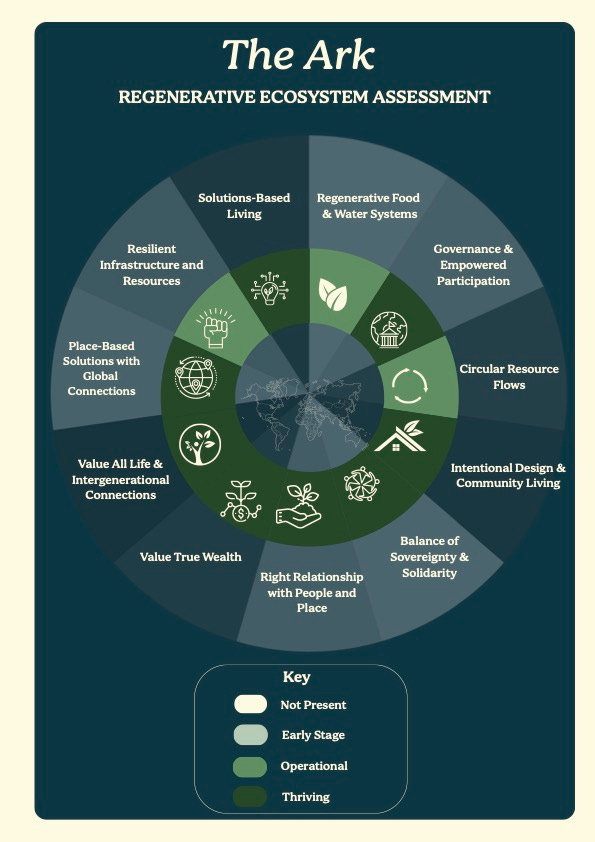
The Quest has identified the following areas as crucial for CommuniTrees, or any intentional community aligned with ecosystem services and living in the right relationship with self, each other and the natural world. The following is an emerging “Regenerative Ecosystem Assessment" which outlines an eleven-point framework for resilient and regenerative living.
Regenerative Food and Water Systems: farming as a service to restore landscapes, connect people with nature and provide a healthy and holistic diet in a way that restores the carbon cycle, builds soil, heals watersheds and ecosystems. Healthy soils=healthy communities.
Communal structures for Governance that enable empowered participation by all in the ecosystem through transparent and just decision making, holistic management, distributed authority with clear delineation of duties and responsibilities.
Circular Resource Flows (energy, water, trash, recycling, compost, information etc.) where there is no waste, no extraction and all elements from one system can be inputs into another system. Communities are designed to not just minimize but neutralize and heal any negative impact to the land and surrounding areas, while flourishing economically.
Intentional Design and Community Living by which individuals in the community can share living, working and communal space that honors place and people while holding appropriate boundaries for the unique needs of each individual and the community through holistic management.
Balance of Sovereignty and Solidarity where the good of the community does not come at the cost of an individual and the good of the individual does not impair the community at large.
Right Relationship to Place and People by honoring the natural ecosystem where the community is (healing the land through human stewardship) and by being in an intentional relationship with indigenous wisdom and locals (healing the community and human relationships), living with love of place, honoring its history and all life it supports.
Valuing True Wealth where money and finance are not the end goals. Wealth is defined as quality of life, a sense of belonging, purpose and meaning and all resources are holistically managed.
Value all life and the contributions to the larger ecosystem where communities treat both the youth and the elderly with respect and intentionally create cross-generational connections. The value of ecosystem services are revered and service roles (teaching, health care, youth and elderly care etc.) are respected and valued.
Resilient Infrastructure and Resources The necessary skills, resources and infrastructure to sustain life are within the community, from growing food to energy production, to building shelters and water systems, education, health care, community economic systems, arts, and entertainment etc. Focus on sourcing locally with little to no reliance on global supply chains.
Place-Based Solutions with Global Connections While knowledge, connections, and sharing are connected globally; solutions, actions and projects are nuanced for local culture and climate, led by people from the area and living in the community.
Solutions Based Living whereby the simple act of HOW the community lives is a solution to climate change, inequality, injustice, violence and greed. It is not about telling others how to live, rather living the solutions in day to day lives as a model.
(Funny side note or affirming side note…when I asked two different AI platforms to come up with the top 10 key indicators for resilient and regenerative living the same topics came up for both ChatGPT and Gemini. The list above was created through years of immersive research and study, good to know AI is sourcing good data!)
The first case studies from this research are now available on the website. You can see stories of real-life communities thriving today and their orientation to the Regenerative Ecosystem Assessment outlined above. The picture to below is an infographic of the Assessment for a community called The Ark in Santa Teresa.
Each community also has a short video on our YouTube Channel as well. Please feel free to share these resources with anyone you feel would be interested.
We do have a choice for how we live and the next chapter for humanity. Let it be one of integration, healing and #RegenerativeLiving! Let’s build #CommuniTrees together! What is your vision? How can we collaborate for the highest good?
Please follow along and engage with the Quest on social media LinkedIn, Instagram, Facebook, YouTube, Substack).
Love and Light,
Brenna
Do you still need a home for the trees in California?
Brenna, you're a great visionary and leader with her feet in the soil and her hands on the steering wheel of what's possible. Thanks for putting this is such a succinct and clear way.